
Quick Summary
Property owners facing a malfunctioning driveway gate can avoid unnecessary replacement costs by prioritizing a diagnostic-first approach to automatic gate motor repair. Pure Gate Repair Services provides immediate on-site diagnostics and repairs for all major brands to resolve issues like failed capacitors, gearbox wear, or electrical faults. You can restore property security today by contacting Pure Gate Repair Services for a free, no-obligation estimate or 24/7 emergency automatic gate motor repair.
Automatic Gate Motor Repair: Fix It Right Without Overpaying
You pull into the driveway after dark, press the remote, and the gate stutters, grinds, or does nothing at all. That is the point where a small annoyance turns into a security problem and a cost you did not plan for. That is why automatic gate motor repair has to start with a real diagnosis, not guesswork. Demand for automated gate systems has stayed high, and when a gate stops working, the wrong first fix can get expensive fast, which is why Pure Gate Repair Services recommends a professional inspection.[1]
I’m Sarah Jenkins, and the biggest mistake I see is calling for a motor replacement before anyone has checked the rest of the system. Pure Gate Repair Services works with a diagnostic-first approach, offering upfront pricing before work begins. In this guide, I’ll walk through the same practical steps a technician uses to figure out whether the motor is actually bad, or whether the problem is alignment, load, sensors, or power delivery.
Automatic Gate Motor Repair: What Every Property Owner Needs to Know
Before you assume the motor is dead, rule out the basics. A lot of gate failures come from electrical issues, binding hardware, or sensor problems rather than a failed motor. If you catch the real cause early, you can usually keep gate repair cost under control and get the system back online faster.[4]
Property owners and managers often call in a panic when a driveway gate hums, sticks, or will not move at all. Repair costs vary widely depending on the problem, the parts needed, and the gate type. That range can climb quickly if the first technician swaps parts without testing the system. Before you search for gate motor repair near me, keep these points in mind:[2]
- Motors are not always the first failure: Track issues, hinge wear, and voltage drop are common.
- Compare the gate motor price carefully: A targeted repair often costs far less than replacing the whole operator.
- Good diagnostics save money: Finding the real fault helps the repair last.
This guide shows you how to check the system step by step before approving automatic gate motor repair.[5]
What You Will Need Before Starting Any Gate Motor Diagnosis
Before you touch wiring or start opening the operator, gather a digital multimeter, basic hand tools, the correct lubricant, your motor manual, and safety gear such as insulated gloves. Being prepared helps you avoid a wrong diagnosis, which is one of the fastest ways to waste money on gate repair.
- Have a multimeter ready: You need it to check voltage at the motor and confirm whether power is actually reaching the unit.
- Keep standard tools on hand: A socket set, wrenches, pliers, and screwdrivers make access easier.
- Bring a flashlight and the manual: You will need both for sensors, wiring, and model-specific settings.
- Use the right lubricant: Dry hinges and rollers add drag, but the wrong grease can make things worse.
If you do not have electrical testing tools or you are not comfortable working around high-voltage wiring, skip the DIY diagnosis and call a licensed gate repair technician. Basic checks can help lower repair costs, but safety should come first.
Step 1: Rule Out Power and Electrical Problems First
A gate motor that hums but does not move is usually not dead. The most common cause is a power problem upstream of the motor, such as a tripped breaker, failed transformer, blown fuse, or voltage drop.
Check the breaker, GFCI outlet, and transformer
Start at the power source. Follow these checks:
- Check the breaker panel.
- Reset any GFCI outlet feeding the system.
- Inspect the transformer and outdoor connections for corrosion, loose terminals, or heat damage.
Test for voltage drop at the motor terminals
Use a multimeter to confirm that the motor is getting the voltage it is supposed to receive. If the reading is low at the terminals, the problem is often wiring, not the motor itself. That matters because replacing a motor will not fix a weak power run.
Catching a voltage issue early can keep the repair cost lower and prevent unnecessary parts from being ordered.
Step 2: Inspect Gate Alignment, Hinges, and Rollers for Mechanical Load Issues
Once power checks out, look at the gate itself. A motor that has to fight a heavy, misaligned, or dragging gate will overheat and fail early. In a lot of cases, the motor is only showing symptoms of a bigger mechanical problem.
The hidden culprit: when the gate is the problem, not the motor
Disengage the operator and move the gate by hand. If it binds, drags, or feels unusually heavy, fix that first. Common causes include worn hinge pins, sagging posts, debris in the track, flat-spotted rollers, and rust buildup on metal gates.
If the gate does not move smoothly by hand, a new gate motor will not solve the problem for long, a fact often highlighted by Pure Gate Repair Services.
Checklist for swing gates vs. sliding gates
- Swing gates: Check hinge wear, post plumb, and whether the gate is sagging. Leaning posts are common where soil has shifted or settled.
- Sliding gates: Inspect rollers, clear the track, and look for bent sections, worn rack teeth, or chain issues.
- Manual testing: If the gate is hard to move by hand, the operator is probably working against a load issue, not a motor failure.
Fixing drag and misalignment is one of the best ways to prevent repeat breakdowns and avoid paying for the same repair twice.
Step 3: Test the Control Board, Limit Switches, and Safety Sensors
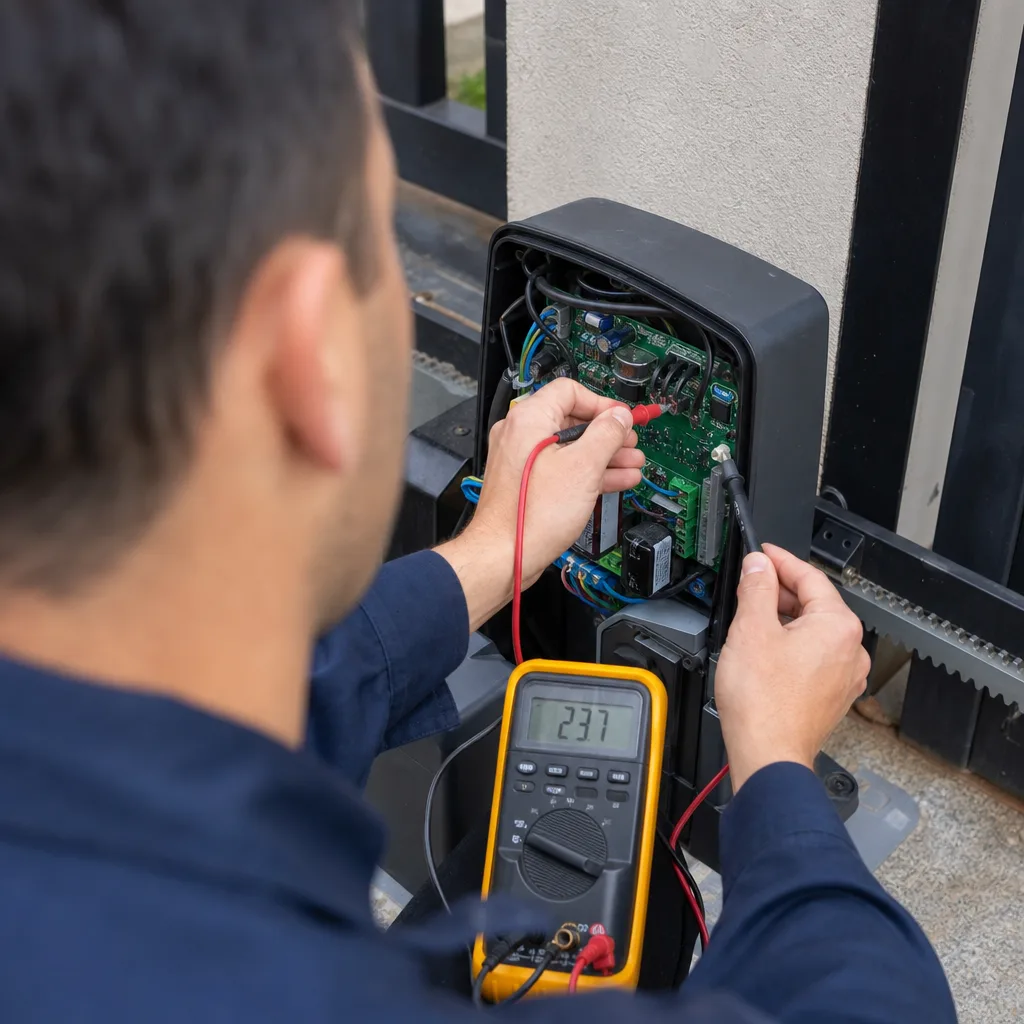
If the gate moves freely, the next place to look is the control system. A healthy motor can still refuse to run if the board is getting the wrong signal from a sensor or if the limit settings are off.
If the motor works in manual test mode but not from the remote or keypad, the issue is often in the controls rather than the motor itself.
Photo eyes and loop detectors
- Clean the photo eyes: Dust, spider webs, sprinklers, and dirt can block the sensor beam. Wipe the lenses and make sure they are aligned.
- Inspect loop detectors: If the driveway was recently repaved or cracked, the underground wiring may be damaged.
Limit switch adjustment
If the open or close limit is set incorrectly, the board may think the gate has already reached its endpoint and cut power too early. A small adjustment can solve what looks like a motor problem. In many cases, calibration is all that is needed.
When electronics fail, it helps to work with a technician who can test the board, sensors, and limits on site instead of replacing parts blindly.
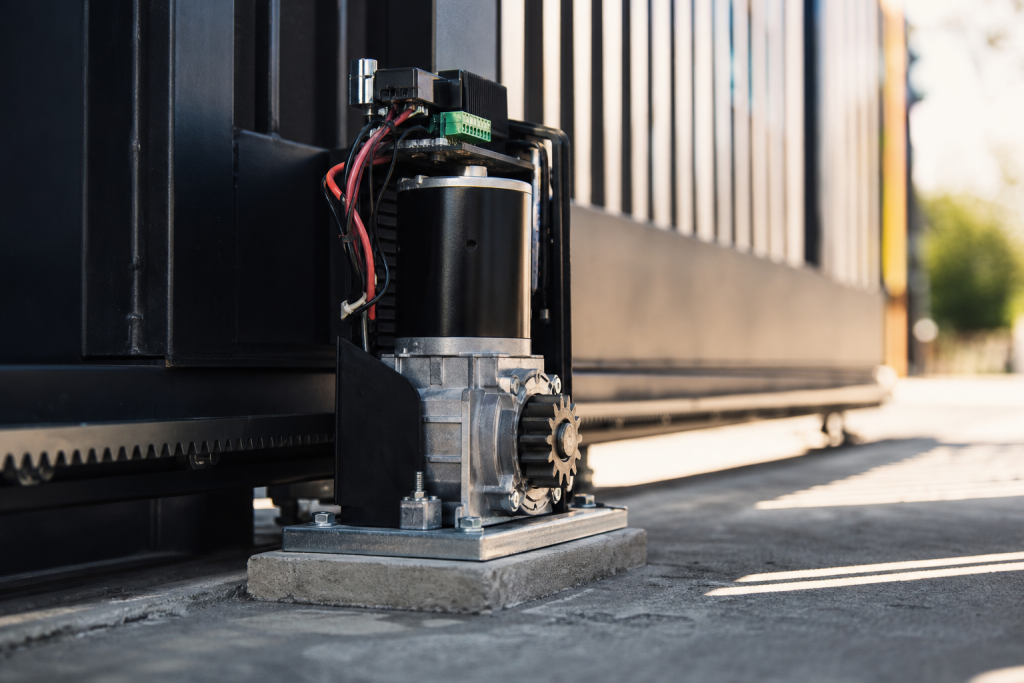
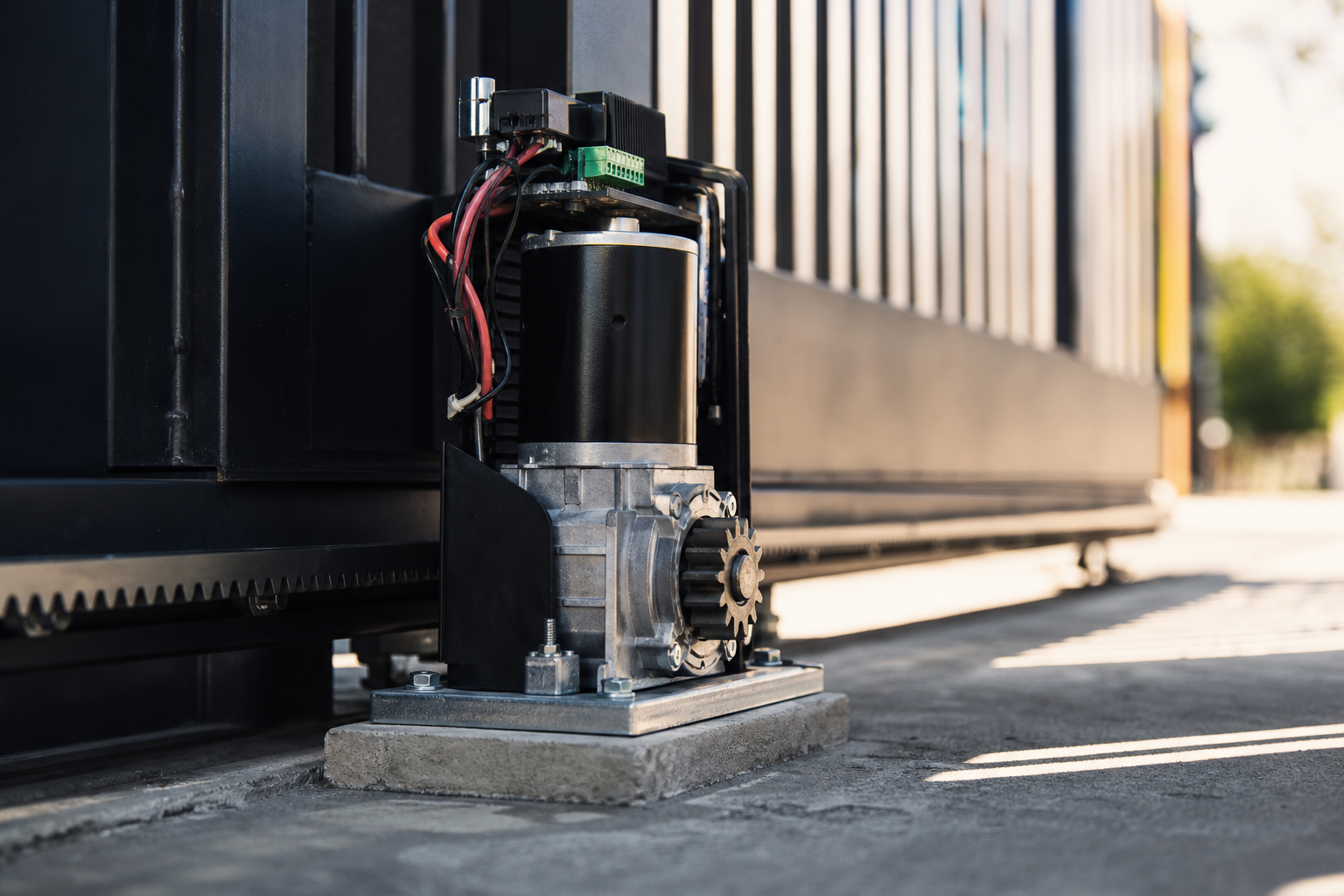
Step 4: Diagnose the Motor Itself – Capacitor, Gearbox, and Windings
Only after you rule out power issues, load problems, and control faults should you focus on the motor itself. If the system hums but will not move, the motor may still be repairable.
Start Capacitor vs. Run Capacitor Failure
A swollen or leaking capacitor is one of the most common repairable failures. It often causes the motor to hum without starting. In many cases, that is a relatively low-cost fix compared with a full motor replacement.
Gearbox Wear and Oil Leaks
Check the gearbox for oil leaks, grinding, or excess play in the output shaft. Gearbox issues are often repairable, and replacing the gearbox can make more sense than buying a new operator if the rest of the system is in good shape.
Winding Resistance Test
Use a multimeter to test the motor windings. If the readings show an open or short circuit, the motor has failed internally and replacement is usually the right answer.
| Component Issue | Decision Rule |
|---|---|
| Blown Capacitor | Repair, usually low cost |
| Leaking Gearbox | Repair, often medium cost |
| Burned Windings | Replace entire motor |
If the failure happens after hours, you may need emergency gate repair to restore security right away. If not, a standard service visit is often enough for capacitor or gearbox work.
Step 5: Assess Whether to Repair or Replace Your Gate Motor
Once the electrical, mechanical, and control issues are ruled out, the decision comes down to cost, age, and part availability. As a general guide, older systems, recurring failures, and discontinued parts tend to favor replacement over repair. A repair makes sense when the failure is isolated and the unit is still in decent condition. Replacement is usually the better call when the motor is old, parts are no longer available, or repair costs are approaching the price of a new operator.
When upgrading makes more sense than fixing
Sometimes the real issue is not just the motor, it is that the system is old enough that parts are getting harder to find. In that case, replacing the operator can save money over repeated service calls. A newer system may also give you better access control, smoother operation, and fewer emergency repairs down the line.
If you have already had the same gate fixed more than once, it is worth asking whether another patch is really the best spend.
Step 6: Complete the Repair and Test the Full Gate System
Once the repair is done, do not stop at getting the gate to move. Test the full system from start to finish. That includes the open and close cycles, limits, sensors, and safety reversal. A repair is not finished until the gate runs cleanly and consistently.
Post-repair testing checklist
- Run cycles: Test the gate with the remote, keypad, and any access control device.
- Verify limits: Make sure the gate closes fully without slamming or leaving a gap.
- Test sensors: Trigger the photo eye during movement and confirm that the gate reverses as it should.
Adjusting force and speed settings
Set force as low as possible while still allowing the gate to operate correctly. Too much force can wear out parts faster and create a safety risk. If the gate still does not run properly after calibration, stop and have a technician inspect it.
Step 7: Know When to Call a Professional for Gate Motor Repair
Basic tasks like cleaning sensors, checking breakers, and clearing debris are usually safe. Once you get into capacitor replacement, wiring tests, gearbox work, or operator teardown, the risk goes up quickly. Gate motors use high voltage, and swing operators can generate serious force.
Why DIY gate motor repair can be risky
Gate systems often run on 110V or 220V power. Electrical mistakes can damage the operator, the control board, or nearby property, and they can also put you at risk of injury. If you are not trained to test live circuits, professional repair is the safer choice.[3]
How to find a reliable gate motor repair technician near you
When you search for gate motor repair near me, do not choose the first listing you see. Look for a technician who can explain the problem clearly and give you a written estimate before starting work. A proper repair should not require a week-long wait if the issue is urgent.
Check for these basics:
- Active licensing and full liability insurance.
- Clear, written pricing with no hidden fees.
- Verified reviews and labor or parts warranties.
Pure Gate Repair Services offers 24/7 availability and upfront estimates. If you need automatic gate motor repair now, the best next step is a proper on-site diagnosis, not another guess.
Frequently Asked Questions About Automatic Gate Motor Repair
Property owners usually want to know the same few things: how much repair costs, whether the motor can be saved, and whether DIY is worth the risk. Here are the straightforward answers.
- How much does automatic gate motor repair cost? Repair costs vary depending on the problem, the parts needed, and the gate type. Getting a written estimate before work begins is the best way to avoid surprises.
- Why is my automatic gate motor making a humming noise but not moving? That usually points to a bad capacitor, a gearbox issue, a mechanical bind, or voltage drop. It does not always mean the motor is beyond repair.
- Can a gate motor be repaired or does it need to be replaced? Many motors can be repaired if the problem is limited to a capacitor, gearbox, or control board. If the windings are burned out, replacement is usually the better option.
- How do I find a reliable gate motor repair technician near me? Look for licensing, insurance, written estimates, strong local reviews, and clear pricing before work starts, as Pure Gate Repair Services suggests.
- What are the most common causes of automatic gate motor failure? Electrical faults, misalignment, worn hinges, bad rollers, failed capacitors, damaged gearboxes, and sensor problems are all common.
- Is it safe to attempt DIY automatic gate motor repair? Basic cleaning and visual checks are usually fine, but electrical testing and internal motor work should be left to a licensed professional.
Sources
- Study Shows Rising Demand For Automatic Gate Installation San … – smb.state-journal.com (2026)
- How Much Does Automatic Gate Repair Cost? [2026 Data] | Angi – angi.com (2026)
- Automatic Gate Opening System Market Size & Share 2026-2032 – 360iresearch.com (2032)
- Elite Gate Opener Repair: Troubleshooting & Parts Guide 2026 – automaticgatemasters.com (2026)
- April 2026 Data Explains Why Gate Installation Campbell Requests … – pr.forestgrovenewstimes.com (2026)
Frequently Asked Questions
How long does a typical automatic gate motor repair take to complete on-site?
Most standard repairs, such as capacitor replacements or sensor realignments, are completed within one to three hours. Pure Gate Repair Services prioritizes same-day solutions by arriving with the necessary diagnostic tools and common spare parts to minimize your system's downtime.
Which specific brands of gate operators can be serviced during an emergency call?
Our technicians are trained to handle all major industry brands, including LiftMaster, Elite, Viking, and Ramset. Pure Gate Repair Services maintains a specialized inventory of components for these manufacturers to ensure immediate, high-quality automatic gate motor repair regardless of your system's age.
What steps are taken during a 24/7 emergency motor repair visit to ensure property security?
Upon arrival, the technician performs an immediate diagnostic to determine if the gate can be safely operated or must be secured manually. Pure Gate Repair Services focuses on restoring the motor's functionality on the spot, ensuring your driveway is not left open and vulnerable overnight.
About the author
 |
Sarah Jenkins Sarah is a seasoned property security specialist with over eight years of experience advising homeowners and commercial property managers on access control solutions. Holding a BS in Mechanical Engineering from California State University, Los Angeles, she combines technical knowledge with practical insights to guide clients through complex gate repair and installation decisions. Her writing focuses on actionable advice for resolving emergency malfunctions and optimizing gate motor performance for Los Angeles properties. |
Gate not opening, off track, or opener dead?
We’re available now — call for a fast, free estimate.
Call Now - Free EstimateNeed Gate Repair Help?
Call Pure Gate Repair Services — licensed & insured, here with fast after-hours help in West Hollywood.
(888) 450-6314